What is your Achilles heel? Do you have one? Why do we say that?
Achilles was the son of the sea-nymph Thetis and the mortal hero, Peleus. A prophecy said that Achilles could have a short glorious life that would make him famous forever, or a long life in obscurity. Achilles chose the short and glorious life. That took him to Troy to fight for the Greeks in the Trojan War. The story of his great anger about an incident at Troy was the subject of The Iliad, an epic poem that became the cornerstone of ancient Greek culture. Right across antiquity and beyond, huge numbers of additional stories and works of art explored the life of Achilles…and his death. As he was the greatest, fastest of the warriors at Troy, of course there was interest in how such a hero could die.
The Iliad does not include the death of Achilles, but it does anticipate it. There is mention of Achilles being destined to die young (Iliad, 1.417). There are also clues about what will happen: Achilles’ talking horses (yes, really!) tell him: “Your death is drawing near; and it is not we who will be the cause of it, but a great god and inexorable destiny” (Iliad, 19.408–11); Thetis had also told Achilles about his death. He recalls, “She said I should fall to Apollo and his flying weapons under the walls of the Trojan warriors,” (Iliad, 21.278). Later, the Trojan prince, Hector, adds an extra detail: “On that day when Paris and Phoebus Apollo will destroy you, noble though you be, in front of the Scaean gates!” (Iliad, 22.358).
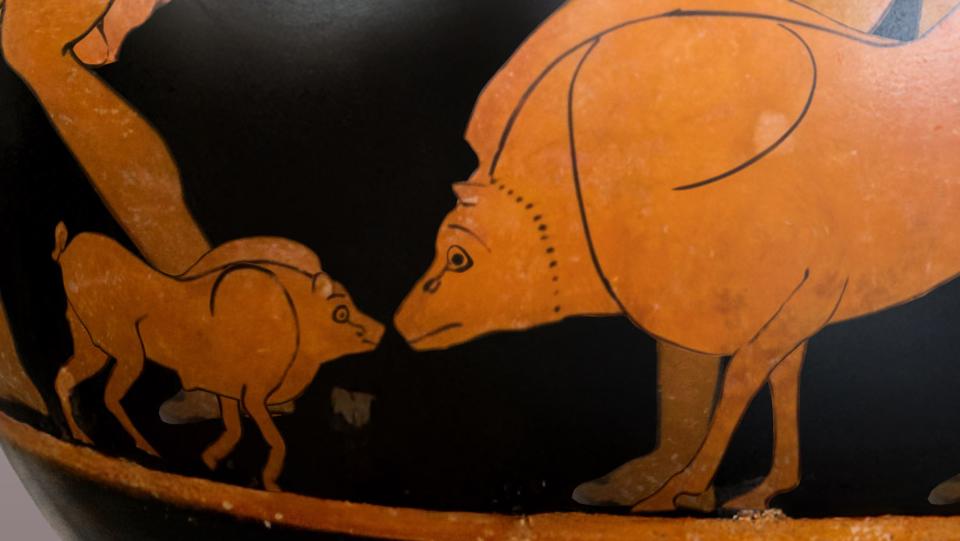
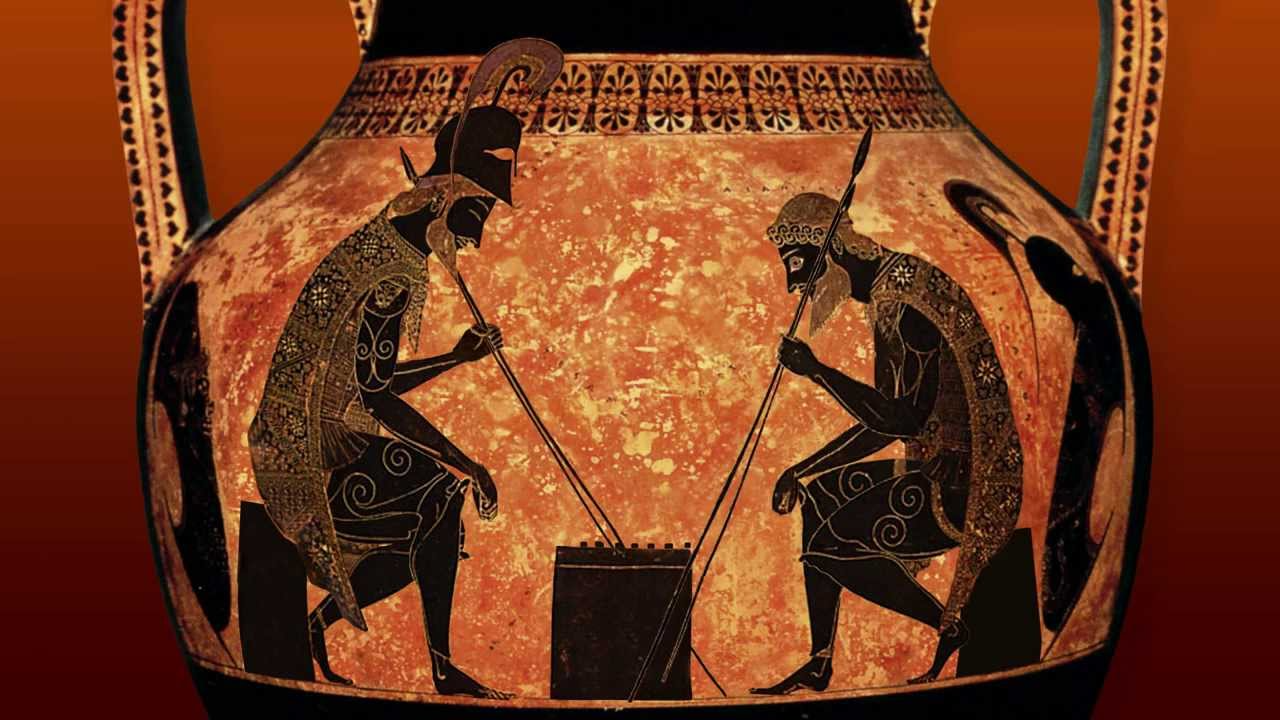
So, from very early times, people knew that Achilles would be struck by an arrow at the Scaean Gates at Troy, brought down by the god Apollo and the Trojan prince, Paris. Vase painters began to decorate their pots with images of Achilles being killed in this way – shot by Paris, who is helped by Apollo. We see this on the vase from which this animation was made.
More and more details were added and the story tweaked as time went on. By the 1st century CE (also known as AD), there was a new story that Thetis had dipped Achilles in the River Styx, using its magic to protect his skin and make him invulnerable, all – they said - expect for the point where he was held (see Statius, Achilleis, 1.133–34). This spot was his astragalus, his anklebone, known in Latin as the talus. From then on, we hear stories that Achilles was struck by an arrow in the only place where he could be hurt. The ankle represented the strength, speed, and capability of a warrior, so there is a symbolic, poetic quality to making that his vulnerable spot. Over time, the astragalus became mixed up with the heel, which is why it is now common to hear someone’s weakness referred to as their ‘Achilles’ heel’. Barbara Carè has analysed representations of Achilles’ death in art and literature and how the astragalus to heel transition took place – you can find out more in her publications – listed on this page.